
Last Updated: 18 November 2026
Borewell water is widely used across Indian homes, particularly in areas where municipal water supply is limited. However, groundwater quality can vary significantly from one location to another.
High TDS, hardness, fluoride, nitrate, iron and other contaminants can affect water quality. Choosing the wrong purifier may leave certain contaminants untreated.
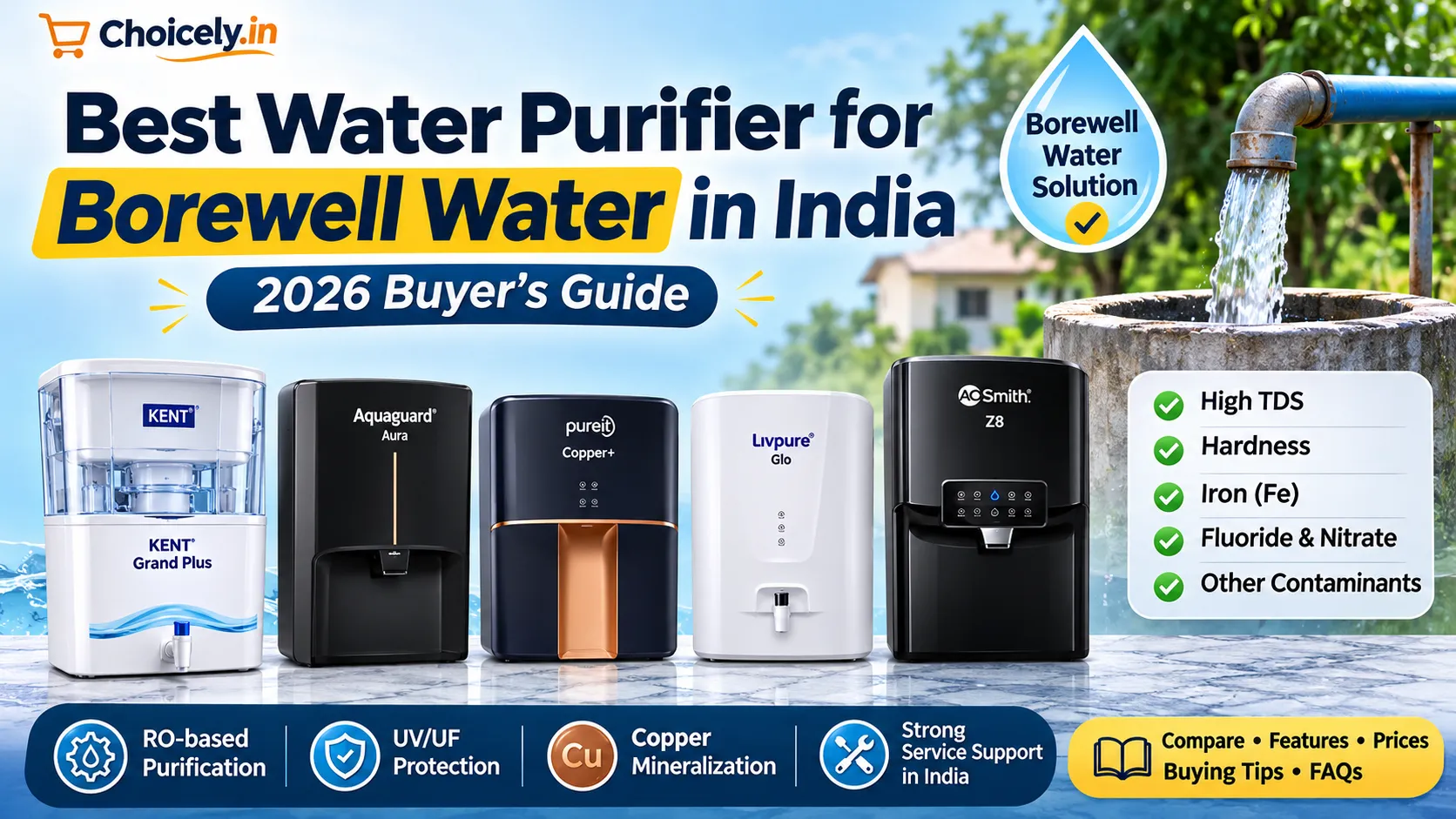
The best water purifier for borewell water in India in 2026 should match your actual water quality. For many borewell households, an RO-based purifier with suitable additional filtration is a practical choice.
But buying an expensive RO purifier without testing your water first is not recommended.
At Choicely.in, we have evaluated popular purifier options based on purification technology, manufacturer specifications, storage capacity, input-water limits, maintenance considerations and ownership value.
This guide will help you choose the right purifier for your family’s drinking water needs.
Table of Contents
Quick Comparison: Best Water Purifiers for Borewell Water in India
Prices below are manufacturer-listed prices or indicative market references checked on 18 November 2026. Online selling prices and availability may differ.
| Water Purifier | Technology | Storage | Price Reference | Best For |
|---|---|---|---|---|
| KENT Grand Plus | RO + UV + UF + TDS Control | 9L | ₹19,999 official listing | Best overall for suitable borewell water |
| AO Smith X7+ | RO purification | Check variant | ₹21,200 MRP | Higher-TDS applications |
| AO Smith Z8 | RO + SCMT | 9L | ₹30,600 MRP | Premium households |
| Aquaguard Aura RO+UV | RO + UV | Verify variant | Check live price | Buyers considering Eureka Forbes |
| Pureit Copper+ RO | RO + UV + MF | Verify variant | Check live price | Buyers interested in copper features |
Important: Do not assume that every model supports every borewell TDS level. Check the exact model’s maximum input TDS, hardness limits, warranty conditions and contaminant-removal specifications before purchasing.
Our Top Recommendations
- Best Overall: KENT Grand Plus
- Higher-TDS Option: AO Smith X7+ (subject to its specified input-water limits)
- Best Premium Option: AO Smith Z8
- Alternative Brands: Eureka Forbes and Pureit, subject to current model availability and specifications
1. KENT Grand Plus – Best Overall Water Purifier for Borewell Water
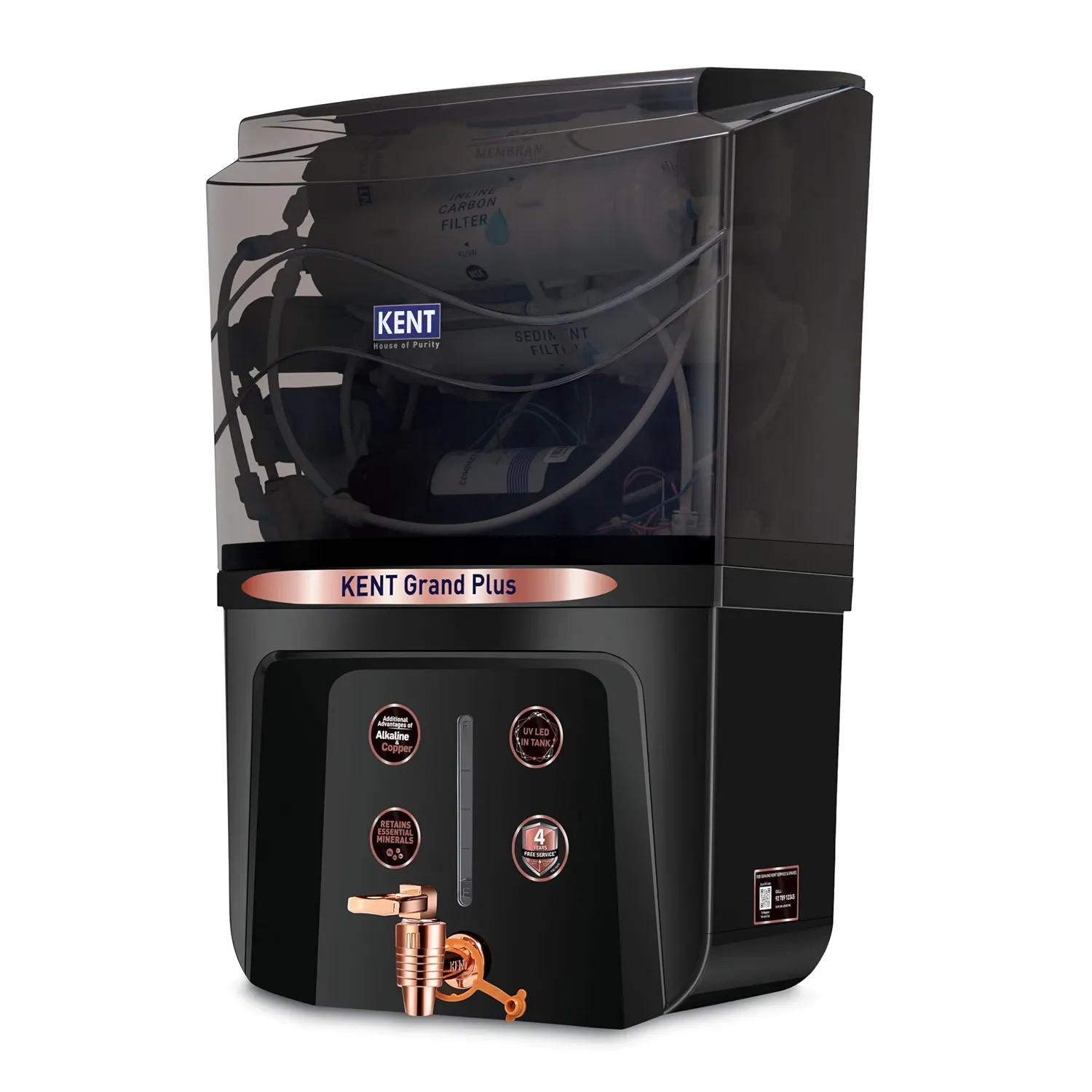
KENT Grand Plus is a feature-rich RO water purifier with multiple purification stages and a relatively large storage tank.
It is a strong option for households looking for RO purification, additional filtration and convenient water storage.
Key Specifications
| Feature | Specification |
|---|---|
| Purification | RO + UV + UF + TDS Control |
| Storage capacity | 9 litres |
| Purification rate | Up to 20 litres/hour |
| Power consumption | 60W |
| Mounting | Wall-mounted |
| Input TDS limit | 1,500 mg/L |
| Warranty/service | 1-year warranty + extended free service offer |
| Official listed price | ₹19,999 |
Why We Recommend It
- RO filtration helps reduce dissolved salts and specified chemical contaminants.
- UV and UF provide additional purification stages.
- TDS control helps manage the mineral content of purified water.
- The 9-litre tank suits many Indian families.
- The manufacturer advertises a purification rate of up to 20 litres per hour.
- Its in-tank UV feature provides additional protection for stored water.
Pros
- Multiple purification stages.
- Good storage capacity.
- Mineral management feature.
- Established Indian brand.
- Extended free-service offer advertised by the manufacturer.
Cons
- Filter and membrane replacements add ownership costs.
- Maximum input TDS is 1,500 mg/L according to the technical datasheet.
- Requires regular maintenance.
Best For: Families using borewell water with tested TDS within the manufacturer’s specified operating limits.
Our Verdict: KENT Grand Plus is a sensible all-round recommendation when its input-water specifications match your borewell report.
2. AO Smith X7+ – Consider for Higher-TDS Borewell Water
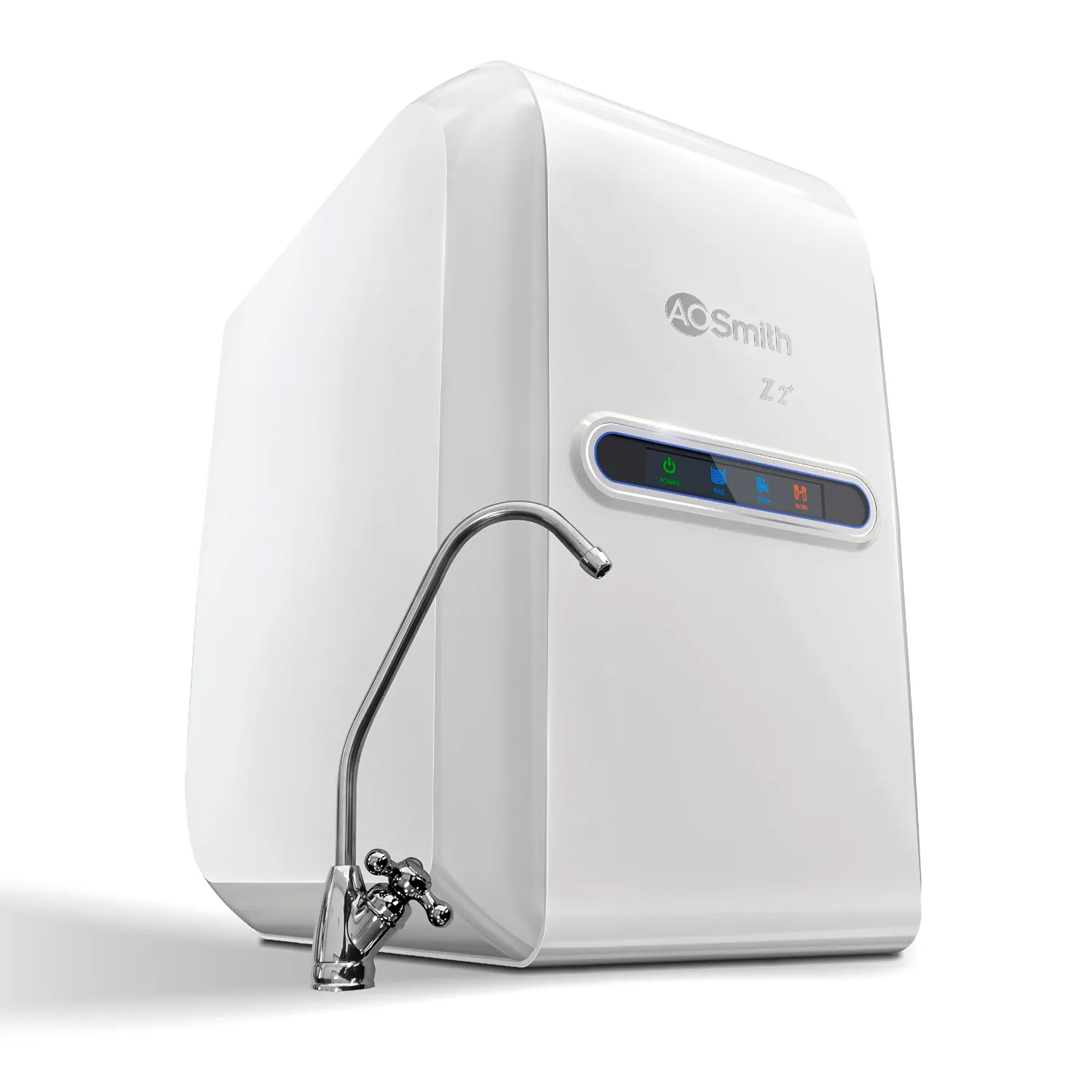
AO Smith X7+ deserves attention from households dealing with higher-TDS groundwater.
The manufacturer lists this model with RO purification for input water containing up to 3,000 ppm TDS.
This makes it an interesting option for households whose water quality exceeds the specified input limit of some conventional domestic RO models.
Key Specifications
| Feature | Specification |
|---|---|
| Purification | RO |
| Maximum input TDS | Up to 3,000 ppm |
| Storage | Verify current product variant |
| Technology | Multi-stage RO purification |
| Official listed MRP | ₹21,200 |
Why Consider It?
- Manufacturer-listed input TDS support up to 3,000 ppm.
- Designed for RO-based purification.
- Suitable for buyers who need a higher input-TDS specification.
- AO Smith has an established water-treatment product range.
Pros
- Higher stated input-TDS limit.
- RO purification.
- Competitive official MRP relative to some premium models.
Cons
- Check the exact operating limits for hardness and other parameters.
- Confirm storage capacity before ordering.
- Service availability and replacement-filter costs should be checked locally.
Best For: Borewell households with higher TDS, provided the complete water analysis falls within the model’s operating specifications.
Our Verdict: A model worth comparing before purchasing a purifier for high-TDS groundwater.
3. AO Smith Z8 – Best Premium Water Purifier
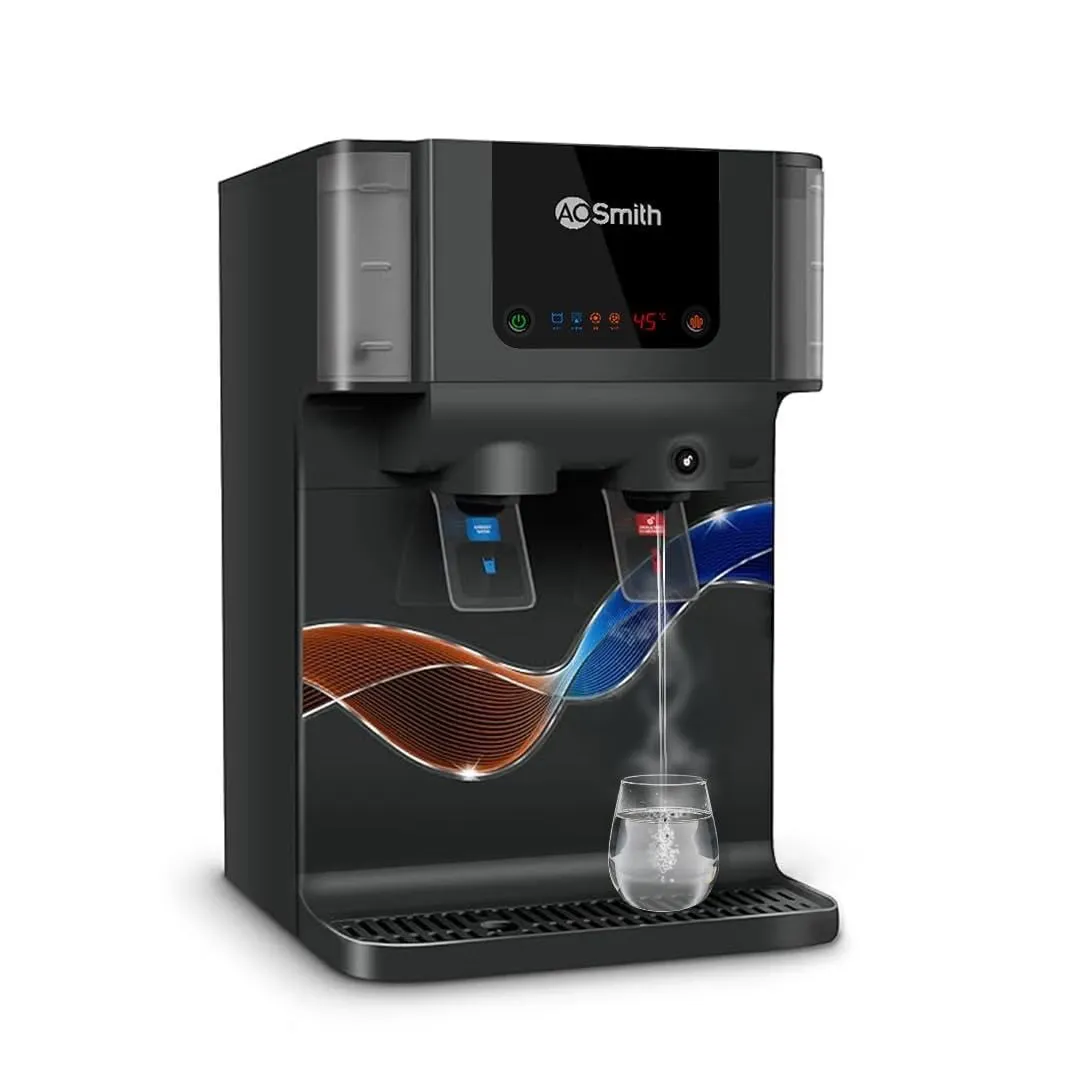
AO Smith Z8 is a premium RO water purifier offering advanced purification and hot-water dispensing.
It is particularly interesting for households that want more than basic drinking-water filtration.
Key Specifications
| Feature | Specification |
|---|---|
| Purification | RO + SCMT |
| Purification stages | 8 |
| Storage capacity | Approximately 9 litres |
| Power rating | 60W (purification) |
| Input voltage | 150–300V AC |
| Maximum input TDS | 2,000 ppm |
| Official listed MRP | ₹30,600 |
| Additional feature | 45°C and 80°C hot water |
Why Consider It?
- Eight-stage purification system.
- RO membrane technology.
- Additional SCMT protection.
- Mineralisation technology.
- Hot-water dispensing at two temperature settings.
- Advanced filter replacement alerts.
Pros
- Premium feature set.
- Hot-water convenience.
- Additional purification technology.
- Voltage operating range specified by the manufacturer.
Cons
- Higher purchase price.
- Additional features may not be necessary for every household.
- Warranty eligibility depends on input-water conditions.
Best For: Families looking for premium features, convenient hot-water dispensing and RO purification.
Our Verdict: AO Smith Z8 is a premium convenience-focused option. Its higher price is justified only if you will actually use its additional features.
4. Aquaguard Aura RO+UV – Alternative for Brand and Service Considerations
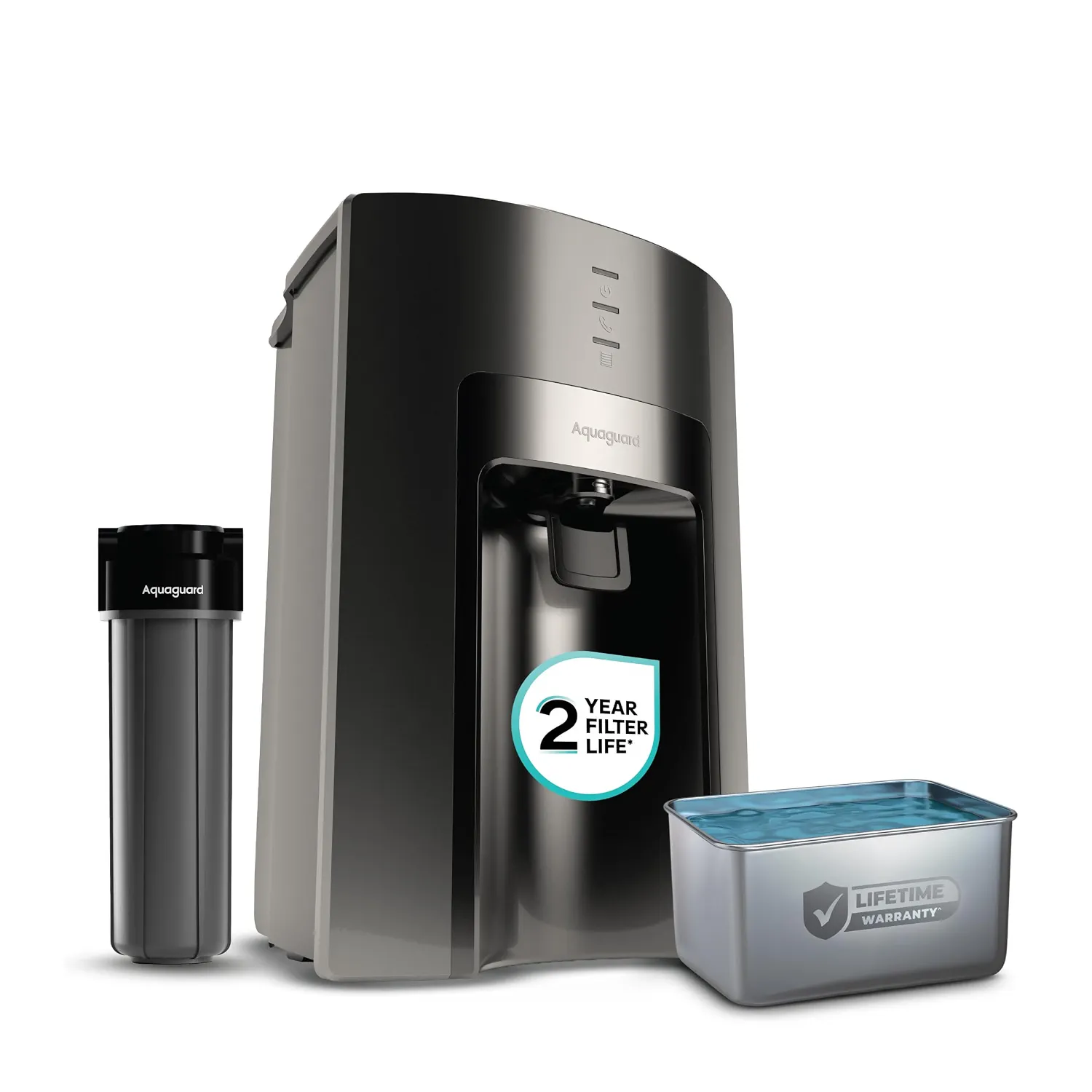
Eureka Forbes Aquaguard is another established name in India’s water-purifier market.
The Aura RO+UV model is worth considering if you prefer its purification platform and can obtain convenient authorised service in your area.
What to Check Before Buying
- Confirm the exact Aura model and purification stages.
- Check its maximum input TDS.
- Verify the maximum hardness and pressure specifications.
- Ask about membrane and filter replacement charges.
- Confirm installation and service availability at your PIN code.
Pros
- Established water-purifier brand.
- RO-based purification.
- Additional UV purification.
Cons
- Model specifications can differ between variants.
- AMC and replacement-filter expenses need consideration.
- Current availability and pricing should be confirmed.
Best For: Buyers who prefer Eureka Forbes and have reliable authorised service nearby.
5. Pureit Copper+ RO – For Buyers Interested in Copper Features
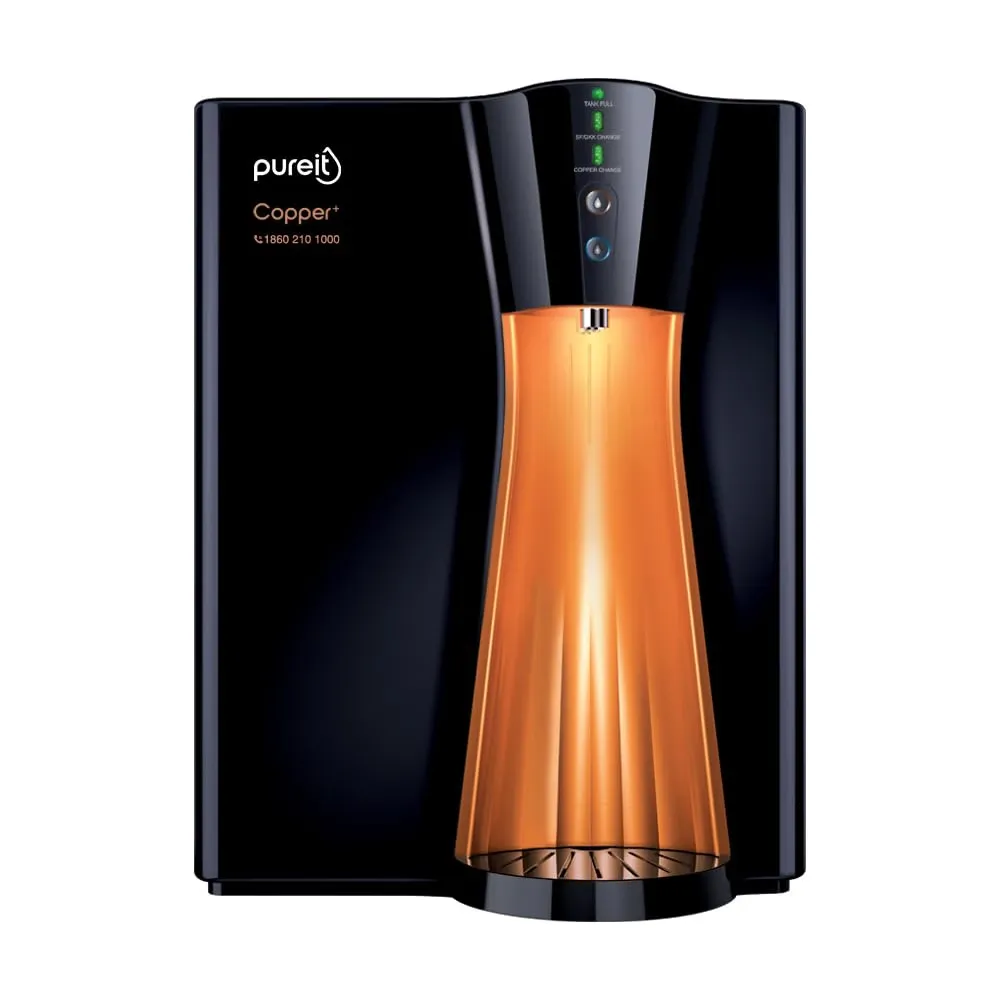
Pureit Copper+ combines RO-based purification with copper-related features.
It may appeal to buyers who prefer copper-infused water as an additional product feature.
However, copper enrichment should not be treated as a substitute for effective contaminant removal or a proven health treatment.
What to Check Before Buying
- Confirm current model availability.
- Check RO and UV specifications.
- Verify maximum input TDS and hardness.
- Compare filter replacement costs.
- Check copper dispensing and maintenance requirements.
Pros
- RO-based purification.
- Additional copper-related functionality.
- Attractive feature set.
Cons
- Copper functionality may increase ownership costs.
- Current variant specifications need verification.
- No need to pay extra for copper features if your priority is simply safe drinking water.
Best For: Buyers who specifically want copper-related functionality alongside suitable RO purification.
Detailed Comparison: Which Water Purifier Should You Buy?
| Model | Main Advantage | Important Limitation | Recommendation |
|---|---|---|---|
| KENT Grand Plus | 9L tank and multiple purification stages | Input TDS up to 1,500 ppm | Best overall |
| AO Smith X7+ | Up to 3,000 ppm stated input TDS | Check other water limits | Higher-TDS option |
| AO Smith Z8 | Premium features and hot water | Expensive | Premium choice |
| Aquaguard Aura | Established brand | Verify current variant | Alternative |
| Pureit Copper+ | Copper-related functionality | Verify current variant | Feature-focused choice |
Our buying advice: Choose the purifier according to your water test results, not the number of purification stages advertised.
Buying Guide: How to Choose the Best RO Water Purifier for Borewell Water
Buying a purifier for borewell water requires more attention than buying one for regular municipal water. Here are the important factors to consider.
1. Test Your Borewell Water Before Buying
This is the most important step.
A basic TDS meter measures dissolved solids. However, it cannot identify individual contaminants.
Get a laboratory water-quality test covering:
- Total Dissolved Solids (TDS)
- Total Hardness
- pH
- Iron
- Fluoride
- Nitrate
- Chloride
- Arsenic
- Microbiological contamination, including E. coli
For groundwater, consider a broader chemical analysis based on your area’s known risks.
2. Understand the Role of RO Purification
RO membranes reduce many dissolved contaminants, including salts and certain metals.
For borewell water with elevated TDS, fluoride or nitrate, RO may be appropriate.
However, not every borewell needs RO.
If laboratory results show acceptable dissolved contaminants but indicate microbial contamination, a properly selected UV or UF system and suitable disinfection may be more appropriate.
3. Check the Maximum Input TDS
Never ignore the manufacturer’s maximum input TDS specification.
For example:
- KENT Grand Plus: Up to 1,500 ppm.
- AO Smith X7+: Up to 3,000 ppm.
- AO Smith Z8: Up to 2,000 ppm.
These are manufacturer specifications, not a guarantee that the water is safe after treatment.
Also check hardness, pH, operating pressure and other applicable limits.
4. Choose the Right Storage Capacity
Storage capacity depends on family size, daily drinking-water consumption and power availability.
| Family Size | Suggested Storage |
|---|---|
| 1–2 members | 5–7 litres |
| 3–4 members | 7–9 litres |
| 5–6 members | 9–12 litres |
| Large families | Consider higher capacity |
These are practical shopping guidelines, not mandatory technical requirements.
5. Consider Filter Replacement and AMC Costs
A purifier’s purchase price is only part of its ownership cost.
Before buying, ask the manufacturer:
- What is the RO membrane replacement cost?
- How frequently should filters be changed?
- What is the annual maintenance cost?
- Is installation free?
- Are service visits chargeable?
- What does the warranty exclude?
A slightly expensive purifier with affordable maintenance may offer better long-term value.
6. Check Local Service Availability
Service availability is especially important in smaller Indian cities and towns.
Before purchasing:
- Confirm authorised installation in your PIN code.
- Ask about technician availability.
- Check replacement-filter availability.
- Confirm warranty coverage.
- Get the AMC price in writing.
Do not assume a brand has excellent service in every location.
7. Consider Indian Operating Conditions
For Indian households, also consider:
- 220–240V, 50Hz electrical compatibility.
- Water pressure requirements.
- Pre-filtration for suspended particles.
- Suitable protection against scaling.
- Durable food-grade storage components.
- Availability of genuine replacement filters.
Homes using borewell water with visible sand or rust may need a suitable sediment pre-filter or iron-removal treatment before the RO unit.
BIS Drinking Water Standards: What Should You Know?
The Bureau of Indian Standards specifies drinking-water quality requirements under IS 10500.
Here are some important acceptable limits:
| Parameter | Acceptable Limit |
|---|---|
| TDS | 500 mg/L |
| Total Hardness | 200 mg/L |
| Fluoride | 1.0 mg/L |
| Nitrate | 45 mg/L |
| Iron | 0.3 mg/L |
| Arsenic | 0.01 mg/L |
| pH | 6.5–8.5 |
Some parameters have permissible limits in the absence of an alternative source. Others have no relaxation.
Meeting the TDS limit alone does not establish drinking-water safety.
Always consider the complete laboratory report.
How Much Does a Good Borewell Water Purifier Cost in India?
The following are indicative shopping budgets, not verified live selling prices.
| Budget | What to Expect |
|---|---|
| Under ₹10,000 | Entry-level RO options; check specifications carefully |
| ₹10,000–₹15,000 | Basic domestic RO models |
| ₹15,000–₹22,000 | More feature-rich RO purifiers |
| ₹22,000–₹30,000 | Premium purification and convenience features |
| Above ₹30,000 | Advanced and premium models |
The best time to buy is during major Amazon and Flipkart sale events, including Prime Day and the Great Indian Festival.
Compare bank discounts, installation charges and AMC costs before placing an order.
Common Mistakes to Avoid When Buying a Borewell Water Purifier
- Buying a purifier without testing the water.
- Assuming a higher TDS always means dangerous water.
- Ignoring fluoride, nitrate and arsenic.
- Purchasing a purifier beyond its maximum input TDS.
- Assuming copper or alkaline features automatically improve health.
- Ignoring filter replacement costs.
- Buying based only on advertised purification stages.
- Forgetting to check authorised service availability.
Frequently Asked Questions
Q1. Which is the best water purifier for borewell water in India in 2026?
KENT Grand Plus is our overall recommendation for borewell water within its specified input limits. AO Smith X7+ is worth considering for higher-TDS applications, subject to its technical specifications.
Q2. Is RO mandatory for borewell water?
No. RO is not mandatory for every borewell. The correct purification technology depends on laboratory water-test results.
Q3. What TDS is suitable for drinking water in India?
The BIS acceptable limit for TDS is 500 mg/L. The permissible limit in the absence of an alternate source is 2,000 mg/L. However, TDS alone cannot establish safety.
Q4. Can RO remove fluoride from borewell water?
RO membranes can reduce fluoride when properly selected and operated. Verify the purifier’s tested performance and operating conditions.
Q5. Can RO remove iron from borewell water?
RO can reduce certain dissolved iron forms, but heavily contaminated or iron-rich water may require dedicated iron-removal pre-treatment.
Q6. Is UV necessary with RO?
RO and UV perform different functions. RO reduces dissolved contaminants, while UV inactivates microorganisms. Additional microbial protection may be useful depending on the water source and system design.
Q7. How often should RO filters be replaced?
There is no universal replacement interval. It depends on incoming water quality, consumption, membrane condition and manufacturer instructions. Replace filters according to service recommendations and performance checks.
Q8. Is a copper water purifier better than a normal RO purifier?
Copper is an additional product feature, not a substitute for effective purification. Prioritise verified contaminant reduction, water quality and maintenance.
Q9. Which is better for borewell water: KENT or AO Smith?
Both have models worth considering. KENT Grand Plus specifies up to 1,500 ppm input TDS, while AO Smith X7+ lists up to 3,000 ppm. The better choice depends on your complete water report.
Q10. Can I drink borewell water after installing an RO purifier?
Only when the purifier is suitable for the source water, properly installed and maintained, and the treated water meets applicable drinking-water requirements. Periodic testing is important.
Final Verdict: Which Borewell Water Purifier Should You Buy?
Choosing the right water purifier is ultimately about matching purification technology to your water quality.
Our recommendations:
- Best Overall: KENT Grand Plus – for borewell water within its specified input limits.
- Higher-TDS Option: AO Smith X7+ – check the complete input-water specifications.
- Best Premium: AO Smith Z8 – for households wanting additional convenience features.
- Alternative: Aquaguard Aura – verify the current variant and local service.
- Copper Features: Pureit Copper+ – consider it only if the additional feature matters to you.
Our Final Buying Advice
Before spending ₹15,000–₹30,000 on a water purifier, get your borewell water tested.
Choose a purifier that addresses the contaminants actually present in your water. Check its input-water limits, maintenance costs and local service support.
Safe drinking water matters more than fancy purification features.
Explore the latest available offers before purchasing, and compare the final delivered price with installation and maintenance costs.
Affiliate Disclosure
Choicely.in participates in affiliate marketing programmes, including Amazon India. We may earn a commission when you purchase through qualifying links, at no additional cost to you.
Our recommendations are based on product specifications, relevant features, ownership considerations and suitability for Indian households.
Why Trust Choicely.in?
At Choicely.in, we aim to make product research easier for Indian buyers.
Our evaluation considers:
- Manufacturer specifications and product documentation.
- Suitability for Indian water conditions.
- Purification technology and operating limits.
- Storage capacity and household requirements.
- Filter replacement and maintenance costs.
- Warranty and authorised service availability.
- Overall value for money.
We prioritise practical buying advice over marketing claims.
Choicely.in – Choose Better. Buy Smarter.