Physical Address
304 North Cardinal St.
Dorchester Center, MA 02124
Physical Address
304 North Cardinal St.
Dorchester Center, MA 02124


Choosing between a Sony and Samsung soundbar in India often feels like a battle between “cinematic prestige” and “feature-packed value.” With prices ranging from ₹7,000 to over ₹1,00,000, the fear of picking a system that sounds muffled in a noisy Indian apartment or fails after a voltage spike is real.
Whether you are upgrading a basic LED TV or building a dedicated home theatre, this Sony vs Samsung soundbar comparison cuts through the marketing jargon. I have shortlisted the only models that survive Indian dust, heat, and compact living rooms while delivering crystal-clear dialogue.
| Category | Winner | Key Benefit | Price Band | Shop |
| 🏆 Best Overall | Samsung Q-Series (Q990D) | True 11.1.4 Channel wireless immersion. | Premium | Check Price |
| 💰 Best Budget | Samsung B-Series (B450) | Deep bass for small Indian flats. | Under ₹15k | Check Price |
| 👑 Best Premium | Sony BRAVIA Theatre Quad | Best-in-class spatial mapping technology. | Ultra-Luxury | Check Price |
| 🛡 Best for Safety | Sony HT-S20R | Built-in protection against voltage surges. | Mid-Range | Check Price |
| 🏠 Best for Small Homes | Samsung S-Series (S801B) | Ultra-slim profile; fits under any TV. | Mid-Range | Check Price |
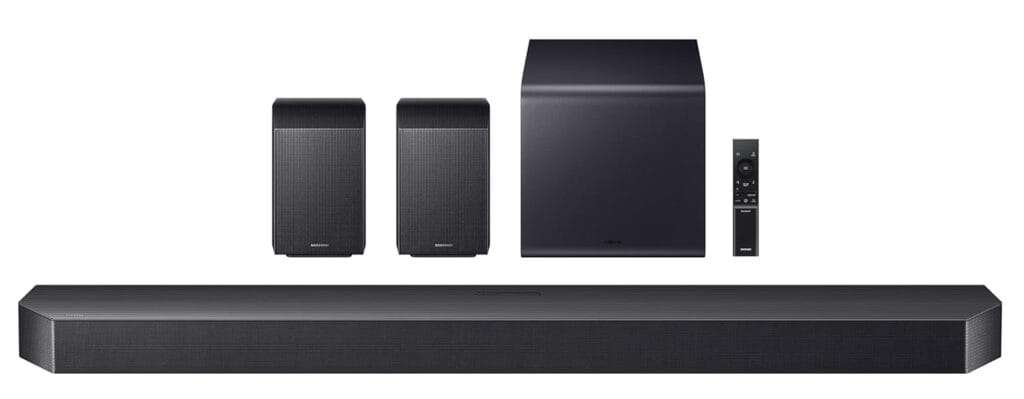
For the Indian buyer who wants a “theatre-at-home” experience without messy wiring across the hall, this is the gold standard. It handles high-decibel Bollywood scores and whispered dialogues with equal ease.
Pros:
Cons:
Who Should Buy This: Those who want the absolute best surround sound and own a Samsung Neo QLED TV (for Q-Symphony sync).
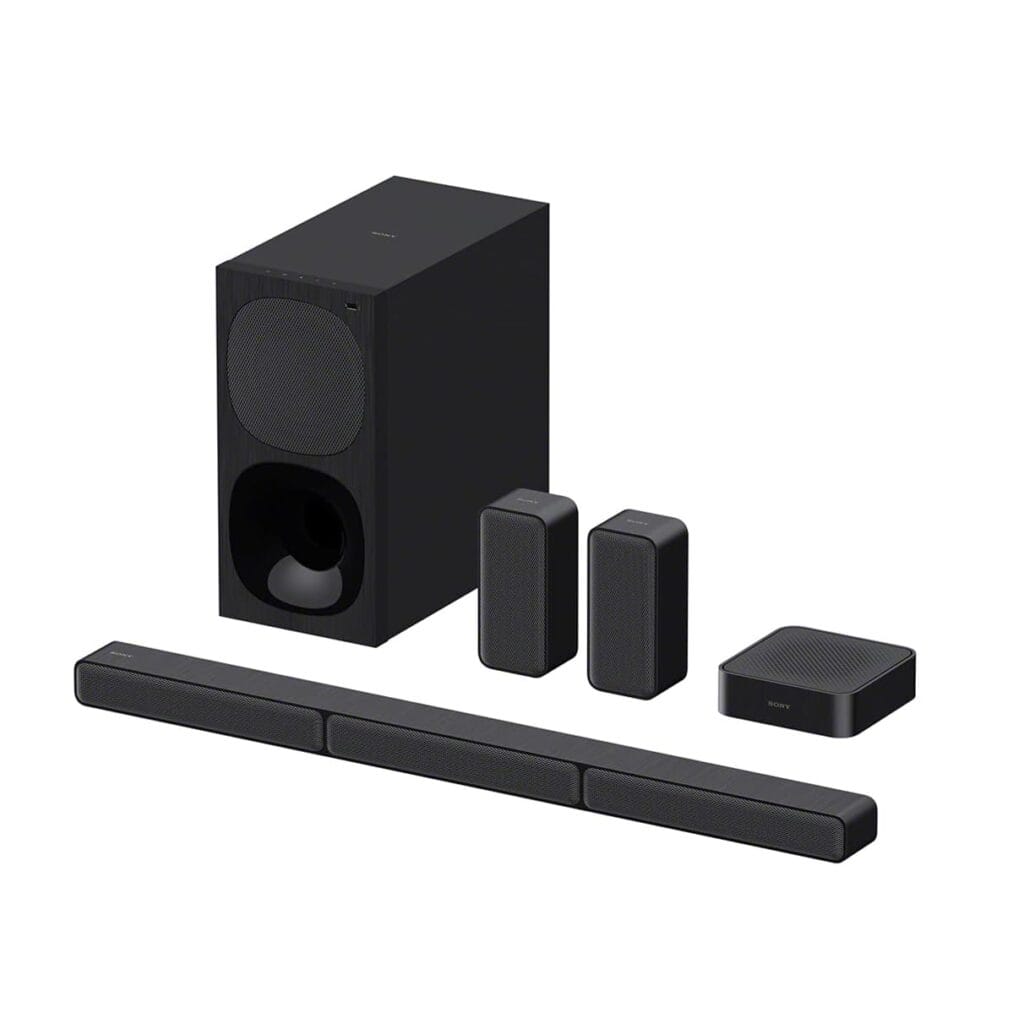
Sony understands the Indian obsession with “Real Surround Sound.” Unlike many “virtual” bars, the S40R provides physical rear speakers and a massive subwoofer that delivers that signature Sony bass.
Pros:
Cons:
Who Should Buy This: Families who prioritize reliability, loud volume, and the trusted Sony brand name.
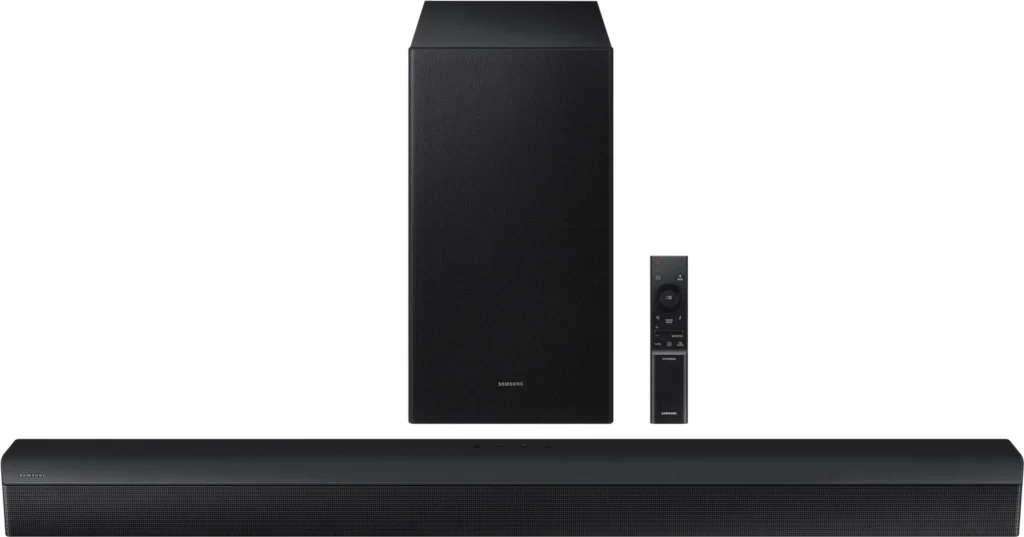
This is a 5.1 channel system that hits the “sweet spot” for middle-class budgets. It offers a dedicated center speaker, which is a lifesaver when fans or ACs are running at full speed and you can’t hear what the actors are saying.
Pros:
Cons:
Who Should Buy This: Buyers looking for a massive upgrade over TV speakers without crossing the ₹25,000 mark.
In India, a soundbar is a 5-to-7-year investment. Samsung generally has more service touchpoints in rural areas, while Sony centers are highly concentrated in urban hubs. Check your local pin code before buying.
Even if a brand claims “built-in protection,” Indian voltage swings are brutal. I strongly recommend using a small 1KVA stabilizer or a high-quality surge protector for any soundbar above ₹20,000.
Do not buy a soundbar based on “Watts” alone. A 1000W local brand bar will sound worse than a 300W Sony bar. Focus on Channel Count (3.1 or 5.1) and Driver Quality.
If you live in a 1BHK or a studio, avoid bulky external subwoofers. Look for Sony’s “All-in-one” bars (like the X8500) which have built-in dual subwoofers to save floor space.
The Samsung B670 or the Sony HT-S20R are the top contenders. Samsung offers better digital features, while Sony offers a more “rugged” build and heavier bass.
Yes. Sony’s 360 Spatial Sound Mapping technology remains the industry leader for creating a “bubble” of sound, even if your room is awkwardly shaped (common in Indian homes).
No. Q-Symphony (using TV + Bar speakers together) only works if both the TV and Soundbar are Samsung. If you have a Sony TV, stick with a Sony soundbar for the “Bravia Sync” benefits.
Samsung currently has the widest service network in India, covering more “Tier 3” towns than Sony.
The “Smart Choice” depends entirely on your current TV and room size:
The Bottom Line: If you want thumping bass for Bollywood hits, buy Sony. If you want a sleek, high-tech cinematic experience for Netflix, buy Samsung.
⚠️ AFFILIATE DISCLOSURE:
This post contains affiliate links. If you purchase through our links, we may earn a small commission at no extra cost to you. We only recommend products we’ve thoroughly researched and that meet our strict transparency standards.